
By early September, commercial landscapes across Boise, Nampa, and Salt Lake City are beginning to recover from summer stress. Cooler temperatures make early fall one of the best times to evaluate thin, compacted, or worn turf.
But not every property automatically needs aeration and overseeding. First, learn why the turf declined and whether these services will actually solve the problem.
What Aeration and Overseeding Do
Core aeration removes small plugs of soil to help relieve compaction and improve the movement of air, water, and nutrients into the root zone.
Commercial properties can develop compacted soil from foot traffic, mowing equipment, construction activity, and repeated use. Signs may include hard soil, thinning turf, runoff, or areas that struggle to recover.
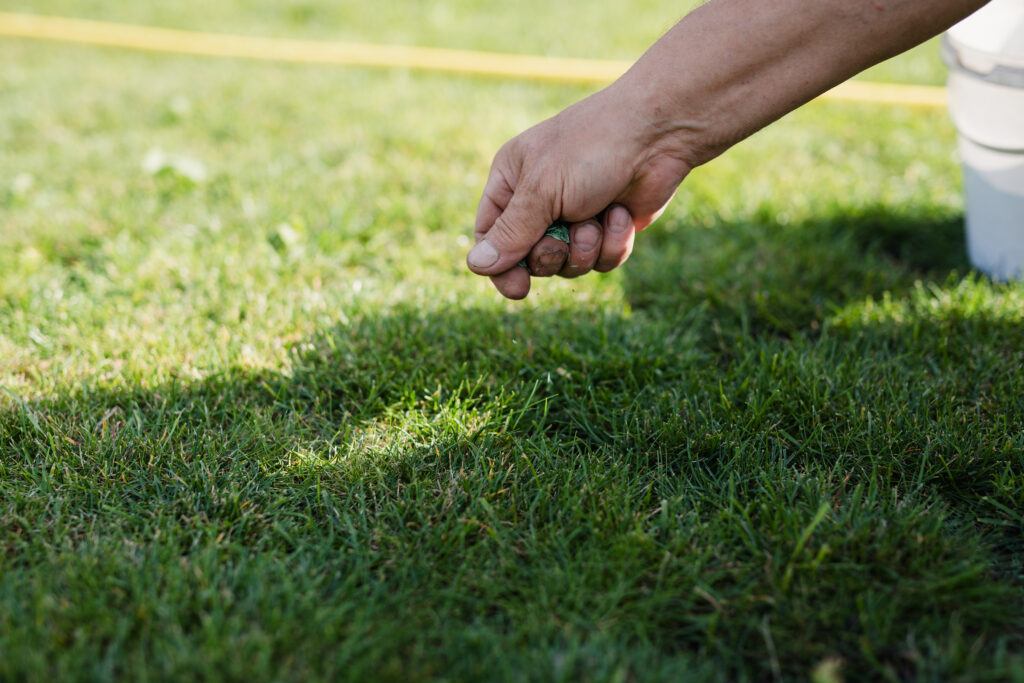
Overseeding adds new grass seed to thin or bare areas to improve turf density. Early fall is often a strong establishment window for cool-season grasses because temperatures are milder and turf is entering an active growth period.
Signs Your Property May Benefit
Aeration and overseeding may be worth considering if you notice:
- Thin turf around entrances, sidewalks, or other high-traffic areas
- Hard or compacted soil
- Bare patches that are filling with weeds
- Water running off instead of soaking into the soil
- Turf that never fully recovered from summer stress
- Areas that have become thinner year after year
These problems are common on commercial properties, but it is important to confirm the cause before choosing a treatment.
When Aeration and Overseeding Are Not the Answer
Thin or brown turf does not always mean the lawn needs more seed.
Poor sprinkler coverage, excessive shade, drainage problems, insects, disease, or unsuitable growing conditions can create similar symptoms. If those issues remain unresolved, new seed may struggle for the same reason the existing turf did.
Before moving forward with renovation work, make sure to diagnose the cause of turf decline.
For example, a recurring dry area may need an irrigation repair rather than overseeding. Turf that continually fails beneath dense tree cover may require a different landscape solution altogether.
Why Early Fall Timing Matters
Cool-season turf grows most actively during spring and fall, making September an important recovery period across Idaho and Utah.
Aeration can help address compaction, while overseeding can rebuild density in weak areas. When paired with proper irrigation and site preparation, these services can help commercial turf recover before colder weather slows growth.
Successful overseeding also depends on good seed-to-soil contact and consistent moisture during establishment.
Start With a Property Walk-Through
Before scheduling fall turf work, look at where problems appeared during summer.
Are thin areas concentrated around heavy traffic? Are dry spots tied to poor sprinkler coverage? Are weeds taking over areas where turf has declined?
Understanding those patterns helps determine whether aeration, overseeding, irrigation repairs, or another improvement should be part of the fall plan.
If your Boise, Nampa, or Salt Lake City commercial property is showing thin turf, compacted areas, or recurring bare spots, Cutting Edge Landscape can help assess the cause and build a fall turf recovery plan around your property’s needs. Contact us today to get started!